(Measurement and Monitoring of Air Bacterial Contamination within the University of Baghdad in Al –Jadria Campus by Using GIS Techniques) ( قياس ومراقبة التلوث البكتيري للهواء في حرم جامعة بغداد بواسطة تقنيات نظم المعلومات الجغرافية )مناقشة
by
قسم علوم الحياة
College of Science for Women
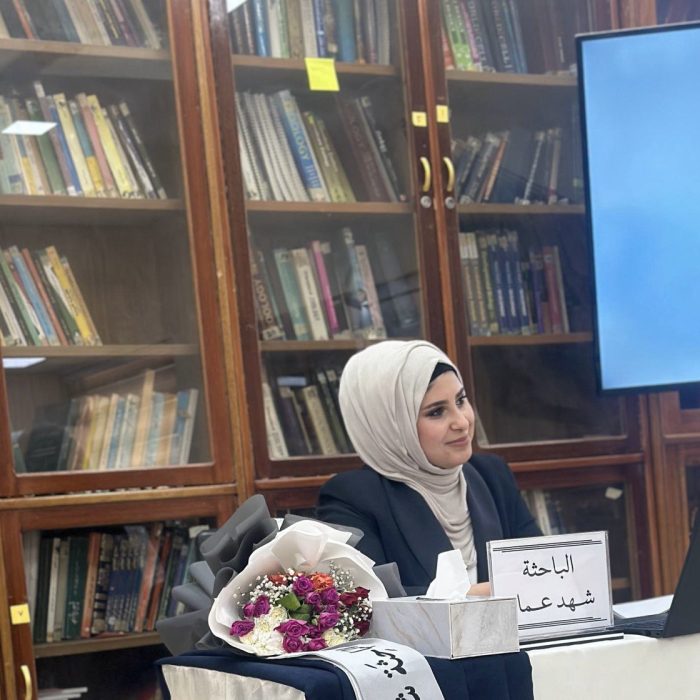
تضمنت الدراسة ثلاثة محاور رئيسة، أولاً: قياس المتغيرات البيئية باستخدام جهاز CEM محمول وجهاز GPS لتحديد مواقع جمع العينات، وثانياً: تطبيق تقنيات نظم المعلومات الجغرافية (GIS) لرسم خرائط التوزيع المكاني وتحديد النقاط الساخنة (Hotspots) مع الاستعانة بتقنيات التحسس النائي (RS) لمقارنة البيانات الأرضية مع بيانات الأقمار الصناعية، وثالثاً: التشخيص الجزيئي للعزلات البكتيرية المحمولة جوًّا باستخدامجين ١٦S rRNA.
تهدف الرسالة إلى تقييم التلوث الميكروبي المحمول جوًّا في حرم جامعة بغداد – مجمع الجادرية، من خلال قياس تراكيز البكتيريا في الهواء ودراسة ارتباطها بالعوامل البيئية المتمثلة بدرجة الحرارة، والرطوبة النسبية، والجسيمات الدقيقة (PM٢.٥ وPM١٠). وقد جُمعت عينات الهواء من عشرة مواقع مختلفة داخل الحرم الجامعي خلال المدة من كانون الأول ٢٠٢٣ وحتى حزيران ٢٠٢٤، لتغطية الأشهر الرطبة والجافة.
- تجاوزت تراكيز الجسيمات الدقيقة (٥ وPM١٠) الحدود المسموح بها وفق لائحة المحددات الوطنية لنوعية الهواء المحيط في العراق، ولا سيما خلال الأشهرالرطبة.
- تجاوزت أعداد البكتيريا المحمولة جوًّا داخل الحرم الجامعي المستويات العالمية المحددة في تقارير المفوضية الأوروبية لجودة الهواء.
- سُجّل أعلى تركيز بكتيري خلال الأشهرالرطبة في موقع S٥ (كلية الهندسة – الخوارزمي)، بينما ظهر أعلى تركيز خلال الأشهرالجافة في موقع S٢ (كلية الإعلام).
- أظهر موقع S٦ (كلية العلوم) أعلى مستوى من التنوع البكتيري، مما يشير إلى بيئة ميكروبية أكثر ثراءً وتعقيدًا.
- كما شمل التشخيص الجزيئي للبكتيريا المحمولة ١٢ عزلة بكتيرية: Neobacillus drentensis
, Priestia endophytica, Arthrobacter luteolus, Exiguobacterium sp., Exiguobacterium mexicanum, Moraxella osloensis, Enterobacter ludwigii, Peribacillus simplex, Priestia aryabhattai, Priestia megaterium, Chryseomicrobium amylolyticum.
٦. كشفت نتائج العزل والتشخيص عن وجود تنوع ميكروبي ملحوظ للبكتيريا المحمولة جوًّا، حيث تم توثيق بعض الأنواع لأول مرة في العراق من الهواء الخارجي، بينما عُثر على أنواع أخرى سبق توثيقها من بيئات غير هوائية. وقد جرى إيداع جميع التسلسلات الجينية للعزلات في قاعدة بيانات NCBI باسم الطالبة والمشرفة.
حصلت الطالبة على تقدير امتياز.
The study focused on three main approaches: Firstly, measuring environmental variables using a portable CEM device and GPS to determine sampling locations. Secondly, applying GIS techniques to generate spatial distribution maps and identify hotspots, along with employing remote sensing (RS) techniques to compare ground data with satellite observations. Thirdly, performing molecular identification of airborne bacterial isolates using the 16S rRNA gene.
The thesis aimed to evaluate airborne microbial pollution within the University of Baghdad campus – Al-Jadriya Complex by measuring bacterial concentrations in the air and investigating their correlations with environmental factors, including temperature, relative humidity, and particulate matter (PM2.5 and PM10). Air samples were collected from ten different sites across the campus from December 2023 to June 2024, covering both wet and dry months.
The most important recommendations which the study has come up:
- Particulate matter concentrations (PM2.5 and PM10) exceeded the permissible limits according to the national air quality standards in Iraq, particularly during the wet months.
- Airborne bacterial counts within the campus surpassed the global levels reported by the European Commission for air quality.
- The highest bacterial concentration during wet months was recorded at site S5 (College of Engineering – Al-Khwarizmi), while during dry months the highest concentration appeared at site S2 (College of Media).
- Site S6 (College of Science) exhibited the highest bacterial diversity, indicating a richer and more complex microbial environment.
- Molecular identification of airborne bacteria included 12 isolates: Neobacillus drentensis, Priestia endophytica, Arthrobacter luteolus, Exiguobacterium sp., Exiguobacterium mexicanum, Moraxella osloensis, Enterobacter ludwigii, Peribacillus simplex, Priestia aryabhattai, Priestia megaterium, Chryseomicrobium amylolyticum.
- Isolation and molecular analysis revealed remarkable microbial diversity, with several species documented for the first time in Iraq from outdoor air, while others had been previously identified from non-airborne environments. All genetic sequences of the isolates were registered in the NCBI database under the names of the student and her supervisor.
Excellent grade.