(Environmental and Bacterial Study for Water of Some Schools within Baghdad city )دراسة بيئية و بكتيرية لمياه بعض المدارس ضمن مدينة بغدادمناقشة
by
قسم علوم الحياة
College of Science for Women
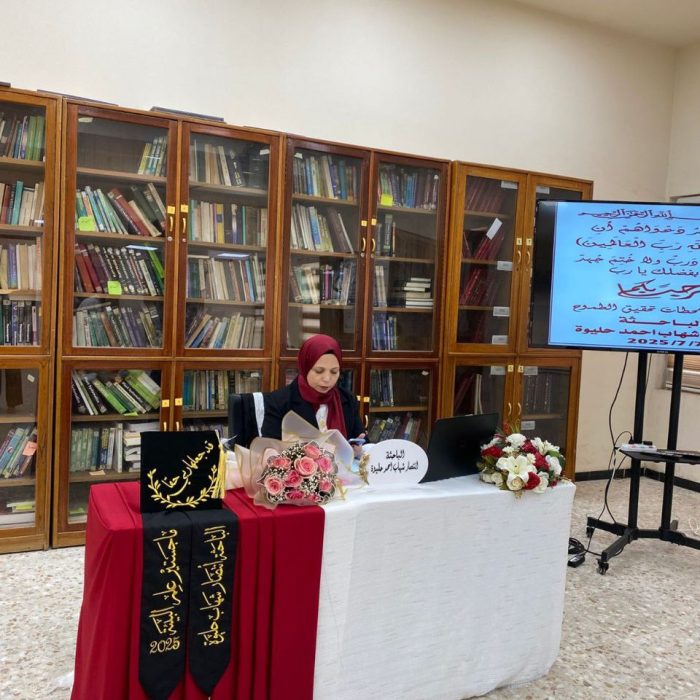
تضمنت الرسالة استخدام مؤشر جودة المياه الكندي (CCME WQI) والمؤشر العراقي (IWQI) لتحديد مستوى ملاءمة المياه للاستخدام البشري، إضافةً إلى تحليل العوامل البيئية المؤثرة على التلوث، وتشخيص بكتيريا الإشريكية القولونية باستخدام تقنية الـ ١٦S rRNA، فضلاً عن تشخيص أنواع البوليمرات البلاستيكية بواسطة تقنية FTIR.
تهدف الرسالة الى تقييم ومقارنة الجودة الفيزيائية والكيميائية والبكتيرية للمياه المخزنة في خزانات المدارس مع مياه الصنبور في بعض مدارس جانبي الكرخ والرصافة ببغداد، والكشف عن مدى تلوثها بالعناصر البكتيرية والجزيئات البلاستيكية الدقيقة، باستخدام التحاليل المختبرية والجزيئية الحديثة.
- وأوصت الدراسة بضرورة الالتزام بالاشتراطات الصحية والبيئية الخاصة بخزانات مياه الشرب، وتفعيل الدور الرقابي والتوعوي للجهات المختصة، مع تصنيع الخزانات من مواد آمنة وسهلة التنظيف، واختيار مواقع مناسبة لتسهيل عمليات الصيانة والتنظيف، فضلاً عن تحديث شبكات المياه ، وإجراء تحاليل دورية للكشف عن الملوثات الميكروبية ، وإعداد برامج توعية صحية لربط تلوث المياه بانتقال الأمراض وتعزيز ثقافة صيانة ونظافة الخزانات في المدارس.
التقدير الذي حصلت عليه الباحثة : جيد جدا
The thesis also included the use of the Canadian Water Quality Index (CCME WQI) and the Iraqi Water Quality Index (IWQI) to determine the suitability of water for human use. It also analyzed the environmental factors affecting pollution, identified E. coli bacteria using 16S rRNA, and identified plastic polymer types using FTIR
The aim of the thesis is to evaluate and compare the physical, chemical and bacterial quality of water stored in school tanks with tap water in some schools on both sides of Karkh and Rusafa in Baghdad, and to reveal the extent of its contamination with bacterial elements and microplastic particles, using modern laboratory and molecular analyses
The study recommended adhering to health and environmental requirements for drinking water tanks, activating the supervisory and awareness-raising role of the relevant authorities, manufacturing tanks from safe and easy-to-clean materials, and selecting appropriate locations to facilitate maintenance and cleaning operations. Furthermore, it recommended updating water networks, conducting periodic analyses to detect microbial contaminants, and developing health awareness programs to link water pollution to disease transmission and promote a culture of tank maintenance and cleanliness in schools.
Very Good