“Association of Vitamin D Receptor and MicroRNA-484 with Kidney Stone Formation”. “إرتباط مستقبل فيتامين D و الرنا الدقيق ٤٨٤ مع تكوين حصى الكلى “مناقشة
by
قسم علوم الحياة
College of Science for Women
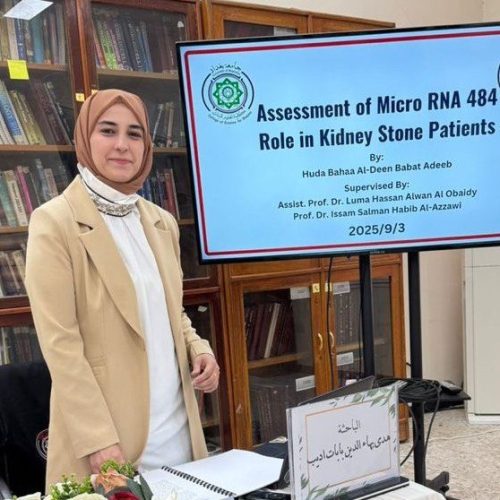
تضمنت الرسالة قياس مستويات التعبير الجيني ل miR‑٤٨٤ و VDR, و إجراء اختبارات كيميائية حيوية لوظائف الكلى (الكرياتينين و اليوريا)، بالإضافة إلى قياس مستويات الكالسيوم وفيتامين D٣ في مصل الدم، و التحليل الكيميائي لحصى الكلى.
هدفت الرسالة إلى تسليط الضوء على الدور التنظيمي المحتمل لـ miR‑٤٨٤ في تعديل التعبير الجيني ل VDR و دوره في تكوين حصوات الكلى CaOx. شملت الدراسة ٩٠ مشاركًا، توزعوا على ٤٠ من الأصحاء (مجموعة السيطرة)، ٥٠ مريضًا بحصى الكلى CaOx، بالإضافة الى تقييم الأختبارات كيميائية حيوية من ضمنها مستوى فيتامين د و الكالسيوم في مصل الدم و تأثيرها على تنظيم تكوين حصى الكلى CaOx.
أظهرت النتائج وجود ارتباط عكسي متوسط بين مستوى التعبير الجيني ل miR‑٤٨٤ و VDRعند المرضى المصابين بحصى الكلى CaOx. و إنخفاظ مؤثر بمستوى فيتامين د عند مجموعة المرضى المصابين بحصى الكلى CaOx مقارنة بمجموعة الاصحاء.
أوصت الباحثة تشجيع التعاون متعدد التخصصات بين أطباء المسالك البولية، وعلماء الأحياء الجزيئية، والباحثين السريريين لترجمة النتائج إلى تطبيقات عملية و تنفيذ استراتيجيات الصحة العامة لمراقبة وتصحيح نقص فيتامين د في الفئات السكانية الأكثر عرضة لخطر تكوين حصوات الكلى.
التقدير النهائي:امتياز.
The study included measuring gene expression levels of miR-484 and VDR, performing biochemical tests of kidney function (creatinine and urea), measuring serum calcium and vitamin D3 levels, and chemical analysis of kidney stones.
The thesis focused on highlighting the potential regulatory role of miR-484 in modulating VDR gene expression and its role in CaOx kidney stone formation. The study included 90 participants, divided into 40 healthy controls and 50 patients with CaOx kidney stones. Biochemical tests, including serum vitamin D and calcium levels, were also evaluated, revealing their impact on regulating CaOx kidney stone formation.
The results showed a moderate negative correlation between miR-484 and VDR gene expression levels in patients with CaOx kidney stones. Vitamin D levels were significantly lower in the group of patients with CaOx kidney stones compared to the healthy group.
The researcher recommended encouraging interdisciplinary collaboration between urologists, molecular biologists, and clinical researchers to translate findings into practical applications, and implement public health strategies to monitor and correct vitamin D deficiency in populations most at risk for kidney stone formation.
Excellent.