Impact of Plant Residue Mulching and Cyanobacterial Biofertilizer on Weed Management and Wheat Yield in Iraq”“تأثير التغطية بالمخلفات النباتية والسماد الحيوي الطحلبي في مكافحة الادغال وحاصل الحنطة في العراق”مناقشة
by
قسم علوم الحياة
College of Science for Women
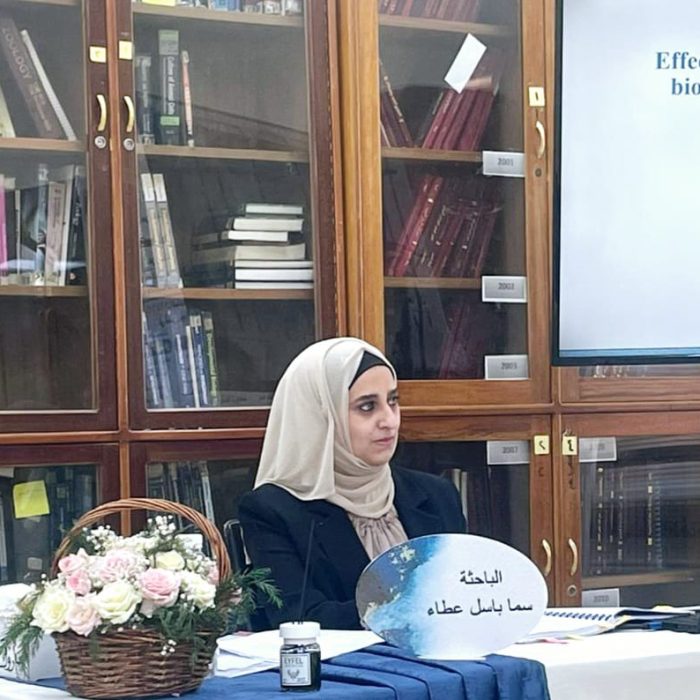
تضمنت الرسالة نتائج مهمة أبرزها ان استخدام مخلفات الذرة البيضاء اوالصفراء بمعدل ٦ طن/هكتار كتغطية لسطح التربة مع استخدام السماد الحيوي الطحلبي مع نصف الجرع الموصى بها من المبيد والاسمدة الكيميائية قد زاد من سرعة انبات بذور الحنطة واعطى نتائج مقاربة لاستخدام الجرع الكاملة من المبيد والاسمدة الكيميائية من ناحية مكافحة الادغال وانتاجية المحصول وبالتالي تقليل الحاجة الى استخدام الكيميائيات للمحافظة على البيئة وتعزيزاهداف الزراعة المستدامة.
هدفت الرسالة إلى تقييم استخدام مخلفات الذرة البيضاء اوالصفراء كتغطية لسطح التربة مع او بدون استخدام السماد الحيوي الطحلبي في ادارة الادغال في حقل الحنطة وتأثير ذلك في ونمو وانتاجية نبات الحنطة اضافة الى دراسة تأثير هذه المخلفات في انبات بذور الحنطة.
أوصت الدراسة باستخدام مخلفات الذرة البيضاء او الصفراء كتغطية لسطح التربة مع نصف التوصية من مبيد الادغال الكيميائي واستخدام التسميد الحيوي الطحلبي مع نصف التوصية من الاسمدة الكيميائية لزيادة انتاجية محصول الحنطة ومكافحة الادغال المصاحبة له.
التقدير النهائي: امتياز.
The thesis includes significant findings such as using sorghum or corn residues at a rate of 6 t/h as mulch in combination with algal biofertilizer and half the recommended doses of chemical fertilizers and herbicide, increased wheat seed germination and achieved results comparable to those obtained with full doses of chemical fertilizers and herbicides in terms of weed control efficiency and crop productivity and reducing dependence on chemical inputs, thereby contributing to environmental protection and promoting sustainable agriculture practices.
The thesis aims to evaluate the effects of sorghum and corn mulch with and without cyanobacterial biofertilizer on wheat seed germination, weed control in wheat field, and the growth and productivity of wheat crop.
The thesis recommended using Sorghum or Corn residues as mulch, along with half the recommended dose of chemical herbicides and the application of algal biofertilizer combined with half the chemical fertilizer dose, to enhance wheat productivity and control associated weeds
Final Grade: Excellent.