“Hybrid Synthesis of Metal Oxide Nanoparticles via (Ultrasonic and Pulsed Laser) and Their Biomedical Applications”التخليق الهجين لجسيمات أكاسيد الفلزات النانوية باستخدام الموجات فوق الصوتية والليزر النبضي وتطبيقاتها الحيوية الطبيةمناقشة
by
قاعة المؤتمرات
College of Science for Women
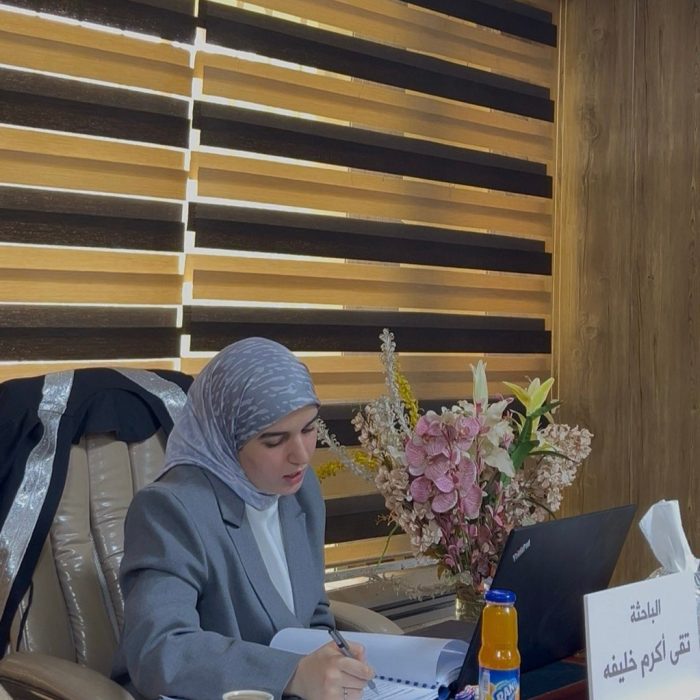
تضمنت هذه الدراسة التي اجريت في جامعة بغداد / كلية العلوم للبنات / قسم الفيزياء، وتم تنفيذ الجانب العملي في مختبر التقانات الاحيائية في كلية العلوم / جامعة بغداد. شملت الدراسة تحضير جسيمات PtO₂ و CdO النانوية باستخدام طريقة هجينة تجمع بين استئصال الليزر النبضي ومسبار الموجات فوق الصوتية في ماء منزوع الأيونات. وقد تم التحضير باستخدام طولين موجيين مختلفين لليزر (٥٣٢ نانومتر و١٠٦٤ نانومتر)، ثم تم تشخيص الجسيمات النانوية باستخدام تقنيات تحليلية متعددة شملت: حيود الأشعة السينية(XRD) ، المجهر الإلكتروني الماسح عالي الانبعاث(FE-SEM) ، التحليل الطيفي بالأشعة السينية المشتتة للطاقة(EDX) ، المجهر الذري القوة(AFM) ، المطيافية فوق البنفسجية–المرئية(UV-Vis) ، مطيافية التحلل بالليزر(LIBS)، وقياسات الجهد السطحي .(Zeta potential) وقد تم تقييم الفعالية البيولوجية للجسيمات النانوية المحضّرة ضد Streptococcus mutans و Candida albicans من خلال دراسة خصائصها المضادة للبكتيريا والفطريات، والمضادة لتكوين الأغشية الحيوية، وكذلك نشاطها المضاد للأكسدة.
تهدف هذه الدراسة إلى تحضير جسيمات نانوية من ثنائي أكسيد البلاتين (PtO₂) وأكسيد الكادميوم (CdO) باستخدام طريقة هجينة تجمع بين تقنيتي الليزر النبضي والموجات فوق الصوتية، وذلك لغرض تحسين كفاءة الجسيمات المحضرة. كما ركزت الدراسة على تحليل الخصائص البنيوية، البلورية، البصرية، والكهربائية لهذه الجسيمات. إضافةً إلى ذلك، سعت الرسالة إلى تقييم الفعالية البيولوجية للجسيمات المحضّرة ضد كلٍّ من بكتريا Streptococcus mutans والفطر Candida albicans، باعتبارهما من العوامل الرئيسة المسببة لتسوس الأسنان، ودراسة قدرتها على تثبيط تكوين الغشاء الحيوي على الأسطح المختلفة، فضلاً عن تقييم نشاطها المضاد للأكسدة.
اهم التوصيات التي توصلت اليها الرسالة والتقدير الذي حصل عليه الباحث:
- تحضير جسيمات نانوية معدنية أخرى باستخدام تقنية الاستئصال بالليزر النبضي مع إمكانية تغيير معلمات الليزر مثل الطاقة، وعدد النبضات، ومعدل التكرار.
- تحضير الجسيمات النانوية باستخدام الاستئصال بالليزر النبضي ومقارنتها بطريقة الاستئصال بالليزر النبضي بمساعدة الموجات فوق الصوتية، مع دراسة تأثيرها على بكتيريا .Streptococcus mutans
- استخدام أنواع أخرى من الليزرات النبضية، مثل ليزر الإكسايمر وليزر ثاني أكسيد الكربون (CO₂)، لتحضير الجسيمات النانوية المعدنية ودراسة خصائصها الفيزيائية.
- تقييم التأثيرات المضادة للبكتيريا لأنواع مختلفة من الجسيمات النانوية، مثل جسيمات النحاس النانوية، على بكتيريا Streptococcus mutans.
التقدير النهائي:امتياز
This study was conducted at the University of Baghdad, College of Science for Women, Department of Physics, while the experimental work was carried out in the Biotechnology Laboratory at the College of Science, Baghdad. The research involved the synthesis of PtO₂ and CdO nanoparticles using a hybrid technique combining pulsed laser ablation with ultrasonic probe in deionized water. The nanoparticles were prepared at two different laser wavelengths (532 nm and 1064 nm), and characterized using various analytical techniques, including X-ray diffraction (XRD), field emission scanning electron microscopy (FE-SEM), energy-dispersive X-ray spectroscopy (EDX), atomic force microscopy (AFM), UV-Vis spectroscopy, laser-induced breakdown spectroscopy (LIBS), and zeta potential measurements. The biological activity of the synthesized nanoparticles was evaluated against Streptococcus mutans and Candida albicans, focusing on their antibacterial, antifungal, antibiofilm, and antioxidant properties.
The objective of the study is to synthesize PtO₂ and CdO nanoparticles using a hybrid method that combines pulsed laser and ultrasound techniques, aiming to enhance the efficiency of the produced nanoparticles. The study also focuses on examining the structural, crystallographic, optical, and electrochemical properties of these metal oxide nanoparticles. Additionally, the research aims to evaluate their antimicrobial activity against Streptococcus mutans and Candida albicans, the main pathogens involved in dental caries, assess their ability to inhibit biofilm formation on various surfaces, and determine their antioxidant potential.
The most important recommendations which the study has come up with and the average obtained:
- Preparation of another metallic nanoparticles by pulsed laser ablation technique with the possibility of changing the laser parameters such as energy, number of pulses, and repetition rate.
- Preparation of nanoparticles using pulsed laser ablation and comparison with ultrasonic-assisted pulsed laser ablation, along with the study of their effect on Streptococcus mutans.
- Using other types of pulsed lasers, such as excimer and CO₂ lasers, to prepare metallic nanoparticles and investigate their physical properties.
- Evaluating the antibacterial effects of various types of nanoparticles, such as copper nanoparticles, on Streptococcus mutans.
Final estimate:Excellent grade.