A letter in the College of Science for Women discussingthe preparation of a nanomaterial in an environmentally friendly way to be used as an antibacterialرسالة في كلية العلوم للبنات تناقش تحضير مادة نانوية بطريقة صديقة للبيئة لاستخدامها كمضاد للبكتريامناقشة
by
قاعة المؤتمرات
College of Science for Women
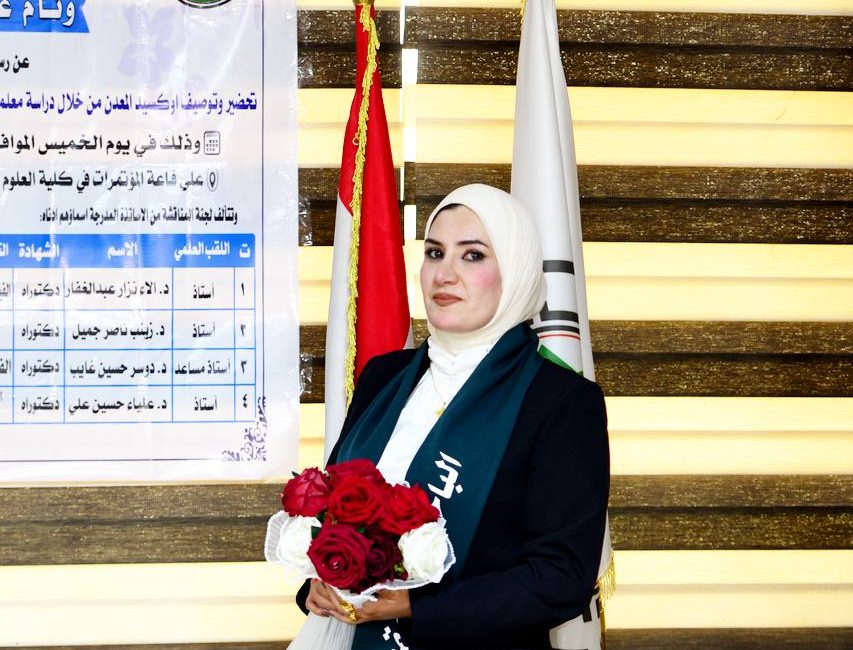
ناقشت كلية العلوم للبنات بجامعة بغداد رسالة الماجستير الموسومة (تحضروتوصيف أوكسيد المعدن من خلال دراسة معلمات البلازما بواسطة الاستئصال بالليزر النبضي للتطبيقات العلمية) للطالبة: وئام عقيل كاظم
وتهدف الرسالة الى تحضير مادة نانوية بطريقة صديقة للبيئة وغير مكلفة لاستخدامها في التطبيقات الطبية المختلفة ايضا يهدف هذا البحث إلى دراسة فعالية المستخلص المائي لنبات الصبار والمركبات النانوية (ZnO و MgO) المحضرة باستخدام تقنية الاستئصال بالليزر ودورها كعوامل مضادة للبكتيريا، ثم تم دمج أكسيد الزنك وأكسيد المغنيسيوم في المستخلص. ومن ثم تعريض العينات الناتجة للبلازما لدراسة تأثيرها في تعزيز النشاط المضاد للبكتيريا.
كما تضمنت الرسالة: تحضير المادة النانوية ZnO , MgO بطريقة صديقة للبيئة غير مكلفة وغير سامة وتم اختبار فعالية هذه المادة ضد البكتريا موجبة الغرام والبكتريا سالبة الغرام
اهم التوصيات التي توصلت اليها الدراسة والتقدير الذي حصل عليه الباحث.
أظهرت النتائج أن البلازما ساهمت بشكل كبير في تحفيز المستخلص والمركبات النانوية، مما أدى إلى تحسين النشاط المضاد للبكتيريا ضد كل من البكتيريا موجبة الجرام وسالبة الجرام و أظهر التحضير النهائي أن الجسيمات النانوية ZnO, MgO لها نشاط قوي مضاد للبكتيريا دون أي تأثيرعلى الخلايا الطبيعية ، يشير الاستنتاج الرئيسي لهذه الدراسة إلى أن الجسيمات النانوية المحضرة بالطريقة الخضراء لل ZnO ,MgO باستخدام مستخلص نبات الصبار (الاوليفرا) يمكن استخدامها كعوامل جديدة مضادة للبكتريا
وقد حصل الباحث على تقدير امتياز
The College of Science for Women at the University of Baghdad discussed the master’s thesis titled ( Synthesis and Characterization of Metal Oxide and study Plasma Parameters by Pulse Laser Ablation for Scientific Application)
of the student: Weam Aqeel Kazem
The thesis aims to prepare a nanomaterial in an environmentally friendly and cost-effective manner for use in various medical applications. This research also aims to study the effectiveness of the aqueous extract of the cactus plant and the nanocompounds (ZnO and MgO) prepared using laser ablation technology and their role as antibacterial agents. Zinc oxide and magnesium oxide were then incorporated into the extract. The resulting samples were subsequently exposed to plasma to study its effect on enhancing antibacterial activity.
The message also included: Preparation of the nanomaterial ZnO, MgO in an environmentally friendly, inexpensive, and non-toxic manner, and the effectiveness of this material was tested against Gram-positive and Gram-negative bacteria.
The most important recommendations reached by the study and the evaluation received by the researcher.
The results showed that the plasma significantly contributed to the stimulation of the extract and the nanocompounds, leading to improved antibacterial activity against both Gram-positive and Gram-negative bacteria. The final preparation demonstrated that ZnO and MgO nanoparticles have strong antibacterial activity without any effect on normal cells. The main conclusion of this study indicates that the green-synthesized nanoparticles of ZnO and MgO using the extract of the aloe plant (oleifera) can be used as new antibacterial agents